
Top Ten Uses for Plants in Your Garden
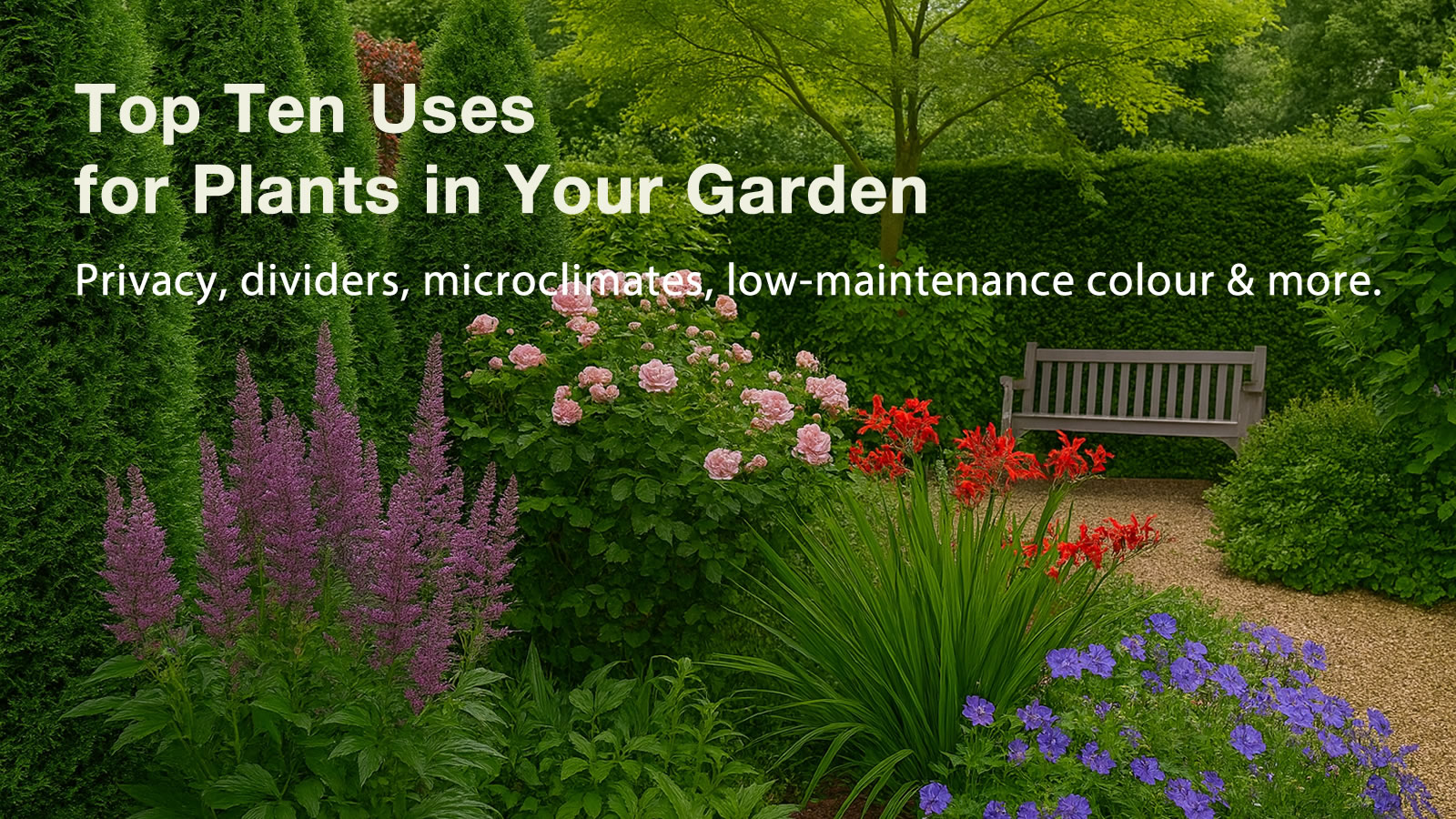
Ten smart ways to use plants
- Privacy screens: slim hedges (Portuguese laurel, yew), pleached trees for height, or climbers on slatted panels. Tip: filter views rather than blocking them; layered planting looks softer and handles wind better.
- Divide spaces: use low hedges (Ilex crenata, lavender) or a seam of tall perennials to suggest rooms. Keep sightlines open so the garden reads bigger.
- Soften boundaries: layered borders and climbers blur fence lines and visually widen plots. Variegated or silver foliage lifts gloomy corners.
- Direct movement: edging plants and repeated clumps guide the route more elegantly than hard barriers. Place three “stepping stones” of colour to lead the eye.
- All-season structure: evergreens and grasses hold form when flowers pause. Mix rounded mounds with vertical accents to avoid a flat look.
- Wildlife support: nectar in summer (salvias, scabious), seedheads in autumn (echinacea), berries in winter (skimmia). A shallow water dish is a big win.
- Colour themes: pick 2–3 hues and repeat them; harmonise with foliage (blue-green vs. lime). A limited palette reads calm and curated.
- Microclimates: plant to generate dappled shade for seating or tender herbs; use hedges to slow wind and reduce evaporation.
- Low maintenance: drought-tolerant perennials, generous mulch, and fewer, larger pots. Choose plants that do something in at least two seasons.
- Container punch: use pots where soil is poor or space is tight; cluster 3–5 for impact and easier watering.
Mini layouts for small plots
1) The slim privacy veil (against a fence)
- Back: slatted fence with Trachelospermum or Clematis viticella.
- Mid: clipped mounds (hebe or small pittosporum) on a zig-zag for depth.
- Front: low edging of lavender or Stachys to soften the line.
2) The room divider (no walls)
- Line: a 3–4 m run of taller perennials (salvia, achillea) with gaps you can see through.
- Anchor: a small multi-stem shrub or urn at the end as a “stop” to the view.
- Route: path crosses at one point (a small square of paving) so it feels intentional.
3) The wildlife ribbon
- Spring: bulbs and hellebores.
- Summer: scabious, salvias, cosmos.
- Autumn: rudbeckia, echinacea, seedheads left standing.
- Winter: skimmia berries and grasses for movement.
4) Pots where soil is tough
- Three large planters with one evergreen anchor each, underplanted with long-flowering perennials.
- Keep pots on feet; mix compost with 20–30% grit/bark for drainage; feed little and often.
Common mistakes & how to avoid them
- Too many different plants: the garden looks busy and high-maintenance. Limit yourself to ~8 core species and repeat them.
- No structure in winter: borders go flat. Add compact evergreens and grasses so something always looks good.
- Dead-ends in routes: people walk on soil if paths do not connect. Give every route a clear destination.
- Overwatering pots: yellow leaves and collapsing roots follow. Water deeply, then wait; feel the compost first.
- Ignoring scale: tiny plants against tall fences disappear. Use a few taller accents to balance the backdrop.
Shopping checklist (small UK gardens)
- Two compact evergreens for structure per 2–3 m of border.
- Three repeat-flowering perennials per metre (salvia, geranium, achillea).
- One grass per metre for movement (Calamagrostis, Stipa).
- Climbers that suit the aspect (jasmine for sun, climbing hydrangea for shade).
- Mulch (compost or bark) and a slow-release feed for pots.
FAQs
What is the best plant for instant privacy?
Climbers on slats are the quickest visual screen. For evergreen structure, Portuguese laurel or yew hedging work well in many UK settings (check soil and aspect).
How do I avoid a messy look?
Repeat the same 6–8 plants across beds, keep edges crisp, and restrict colours to 2–3 harmonising hues.
Will grasses make it look scruffy?
Choose upright forms such as Calamagrostis for a clean look; leave seedheads over winter then cut back in late February.
Further reading & sources
Related guides on Growing Nicely
- How to Grow Hardy Annual Flowers from Seed
- The Best Flowering Climbers for Fences
- Gorgeous Plants & Ideas from Marksall Garden
- Easy Elderflower Cordial
Trusted references
Need plants for privacy, structure or colour?
browse curated collections at Crocus.
Some links are sponsored; this does not affect our recommendations.