
Easy Elderflower Cordial
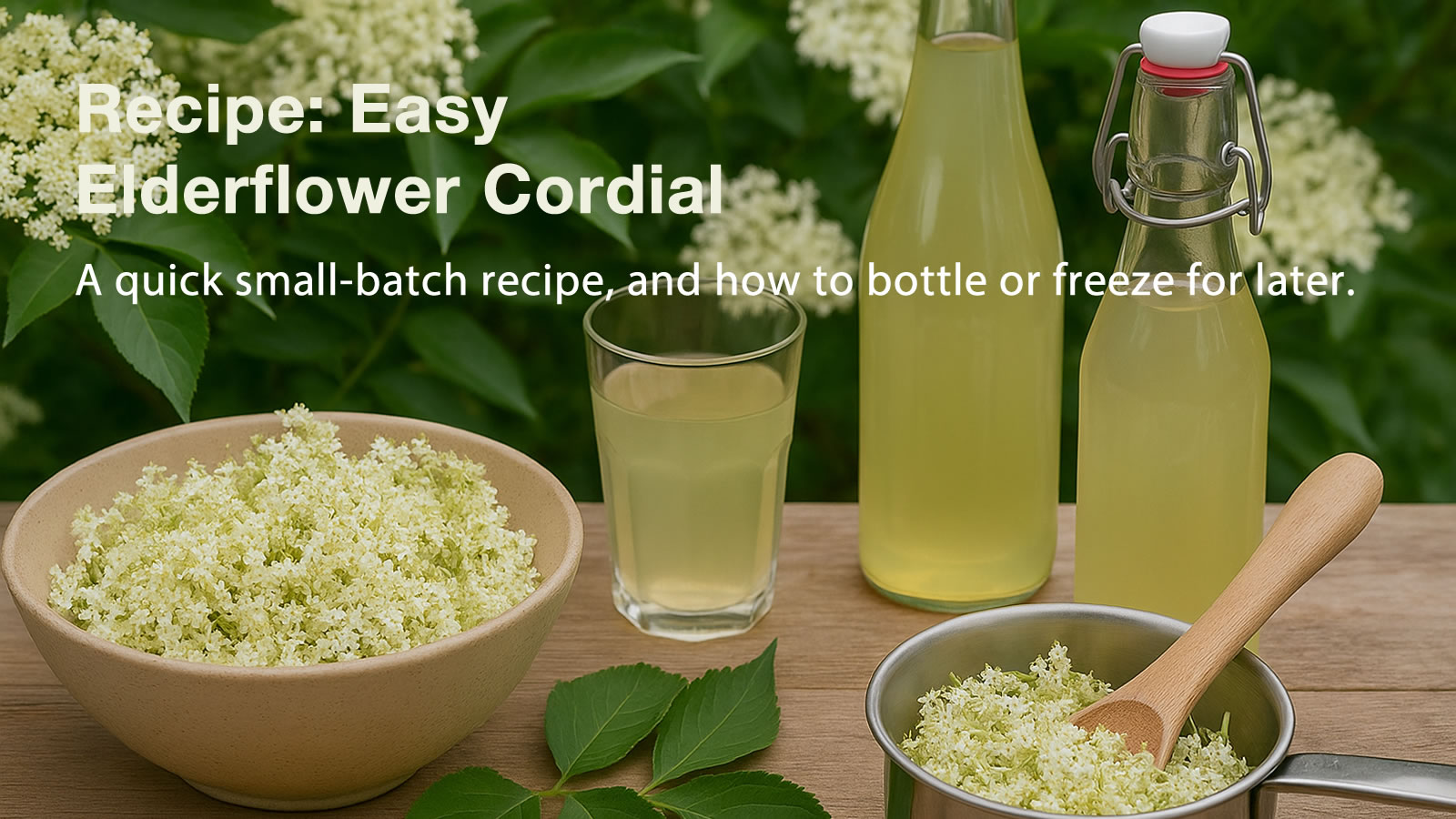
Elderflower cordial is a garden lover’s staple: light, floral, and incredibly easy to make. Peak season arrives late May to early July in much of the UK, when hedgerows and home-grown elders are dusted with cream-white blooms. Below you’ll find a no-fuss recipe, how to keep it clear and flavourful, and how to grow elder so you have your own steady supply each year.
When & where to pick elderflowers (UK)
- Timing: late May–July, on a dry morning after dew has lifted. Avoid rainy days (dilutes pollen and flavour).
- Best heads: freshly opened, creamy-white, fragrant; avoid brown or insect-damaged heads.
- Where: clean hedgerows away from roads, sprayed fields, or dog-walk hotspots; or your own garden tree/shrub.
- Wild picking etiquette: take a little from many plants; leave plenty for pollinators and later berries for wildlife.
Easy elderflower cordial recipe
This small-batch cordial makes about 1.5–2 litres — easy to scale up.
Ingredients
- 20–25 elderflower heads (shaken gently to dislodge insects; don’t wash if you can avoid it)
- 1.5 kg granulated sugar
- 1.2 litres water
- 2 unwaxed lemons (zest & juice)
- 1 unwaxed orange (optional, zest & juice)
- 25 g citric acid (optional but improves keeping quality)
Method
- Make syrup: heat water and sugar in a large pan, stirring until dissolved. Bring just to the boil, then take off the heat.
- Add flavour: add lemon zest, lemon juice, (orange if using), and citric acid. Stir.
- Infuse: submerge elderflower heads (flowers down). Weigh with a plate so they’re under the syrup. Cover and leave 24 hours at cool room temp.
- Strain: lift out the plate and flowers; pour through a sieve lined with muslin/coffee filters into a clean jug.
- Bottle: funnel into sterilised bottles. Refrigerate. For longer storage, freeze in plastic bottles leaving headspace, or hot-bottle (see tips).
Clarity, flavour & storage tips
- Don’t rinse blossoms: you’ll lose fragrant pollen — just shake gently outdoors.
- Muslin matters: double-strain if you want bar-clear cordial.
- Citric acid: extends fridge life and brightens flavour; most chemists/homebrew shops stock it.
- Hot-bottling: warm clean bottles in a low oven (120 °C). Reheat strained cordial to ~80–85 °C, bottle and cap. Cool, then store cool & dark.
- Freezing: simplest preservation — freeze in small bottles or ice-cube trays for cocktails and baking.
- Shelf life: chilled: 3–4 weeks (with citric acid); frozen: 6–12 months; hot-bottled: several months if unopened.
Serving ideas & variations
- Classic: dilute 1:6 with chilled still or sparkling water; add lemon slices and mint.
- Rhubarb twist: simmer 300 g chopped rhubarb in the syrup for 5 minutes before adding flowers (strain well).
- Cucumber cooler: add cucumber ribbons and a few crushed juniper berries to the jug.
- Cocktails: 25 ml cordial + 35 ml gin + top with soda; or a dash in prosecco.
- Desserts: drizzle over fruit salad, stir into whipped cream, or make elderflower jelly with seasonal berries.
How to grow elder (Sambucus) for a yearly harvest
Growing your own elder makes cordial production effortless — you’ll have clean blossoms at arm’s reach and birds to enjoy the autumn berries.
What to plant
- Native elder (Sambucus nigra): vigorous, reliable flower/berry production; prune to keep tidy.
- Ornamental elders: S. nigra ‘Black Lace’ (dark lacy foliage, pinkish flowers), ‘Sutherland Gold’ (chartreuse). Both still usable for cordial.
Position & care
- Aspect: sun or light shade; flowers best in full sun.
- Soil: tolerates most soils; avoid waterlogged sites.
- Size control: prune in late winter; stool to a framework if you want a shrub rather than a small tree.
- Containers: possible with dwarf/ornamental forms in large planters; feed and water regularly.
FAQs
Are elderflowers safe to eat?
Yes, when prepared as cordial/syrup. Avoid stems and leaves (they contain compounds that are removed by straining/heating). Always identify plants confidently before foraging.
Can I use dried elderflowers?
You can, but fresh gives the brightest flavour. Dried flowers vary in strength — start with half the weight and adjust to taste.
My cordial turned cloudy — did I ruin it?
Not ruined; it’s likely fine sediment or pectin. Double-strain and chill. Cloudiness doesn’t affect flavour.
Further reading & sources
Related guides on Growing Nicely
- How to Grow Hardy Annual Flowers from Seed
- The Best Flowering Climbers for Fences
- Gorgeous Plants & Ideas from Marksall Garden
Trusted references
No elder in the garden yet? Plant your own Sambucus for next summer’s harvest —
browse elder varieties at Crocus.
Some links are sponsored; this doesn’t affect our recommendations.